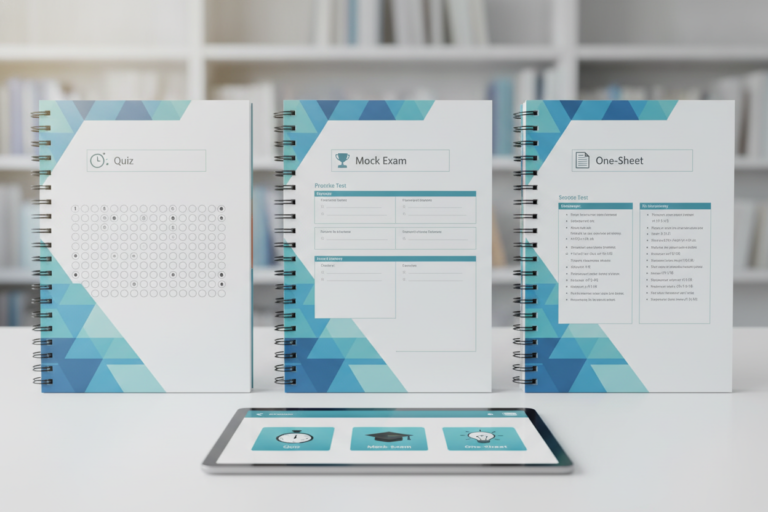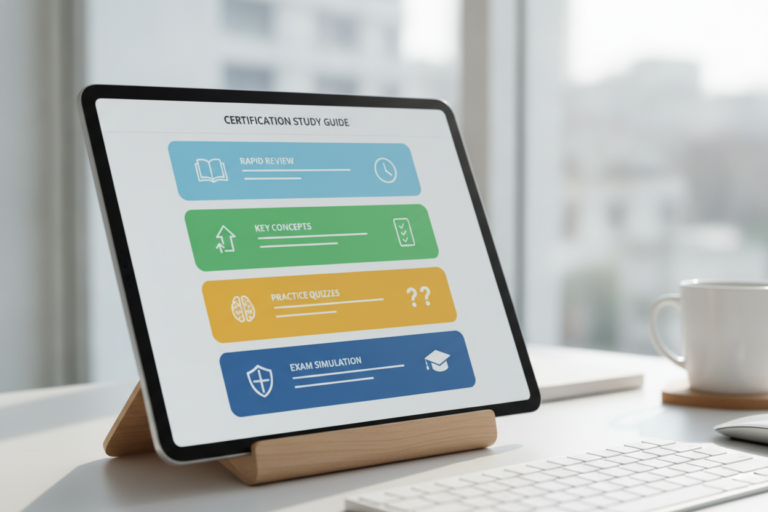
Timing can make the difference between a decent score and a passing score. In certification prep, learners often know the material but struggle to move at the pace the exam requires. A well-designed quiz section helps them practice not only accuracy, but also speed and decision-making under pressure.
To make timing useful, the quiz should reflect the feel of the real exam as closely as possible. If the test is known for short, direct questions, the quiz should move quickly. If it uses longer scenarios, readers should expect to spend more time analyzing each prompt. The goal is to train the brain to work at the same rhythm the exam demands.
One effective approach is to remind learners to answer with purpose. If a question is straightforward, they should avoid second-guessing themselves. If it is scenario-based, they should slow down just enough to identify the key clue. Good pacing is not about rushing; it is about using time intelligently.
Timing also improves the value of answer explanations. When learners see why they missed a question, they can learn whether the issue was content knowledge, reading speed, or test strategy. That makes the quiz a stronger diagnostic tool. For a rapid review site, this is exactly the kind of practical benefit readers expect from a concise, one-page study guide.