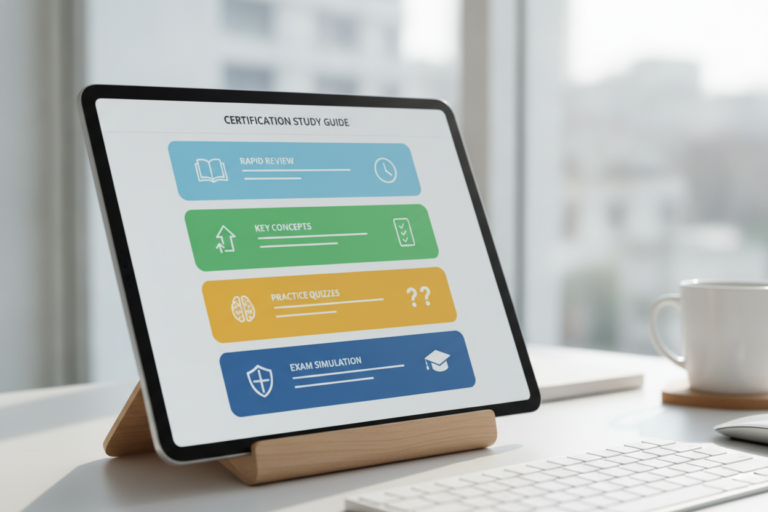
A strong certification guide should feel instantly understandable. When a learner lands on the page, they should know where to start, how to practice, and what to memorize before test day. The simplest way to create that experience is to use the same structure on every guide page, so visitors do not waste time figuring out the layout.
Start with a brief intro that names the certification, the audience, and the value of the guide. Then move directly into a practice quiz that mirrors the exam’s style. This first section helps readers check their readiness and see which topics need more work. When answer explanations cite the official source, the guide becomes more trustworthy and more useful, especially for self-paced learners who want confirmation from the standard they will actually be tested against.
After the quiz, place the full-length mock exam in a clearly separated section. This part should match the real test as closely as possible, including question count, time limit, passing score, and topic mix. Readers should feel like they are taking the actual exam in a lower-stakes setting. That familiarity reduces anxiety and improves performance.
Finish with a One-Sheet section that compresses the highest-value numbers, frameworks, and terms into a final review format. Many learners will return to this section the night before the exam, so it should be concise, practical, and easy to skim. A consistent page structure turns each guide into a dependable study tool rather than just another article.