Realistic exam simulations are one of the strongest tools in certification prep because they show learners what test day will actually feel like. A mock exam should not just cover the same subject area; it should recreate the experience of sitting through the real assessment as closely as possible.
That starts with structure. The number of questions, the time limit, the passing score, and the balance of topics should all match the official exam. When those details line up, learners can practice pacing and endurance instead of guessing what the test will be like. This is especially helpful for candidates who have not taken a formal exam in years.
Simulation also reduces anxiety. Familiarity lowers stress, and stress often affects performance more than knowledge does. By practicing in a format that feels authentic, readers become more comfortable with the flow of the exam. They learn when to move quickly, when to slow down, and how to manage their time across the full session.
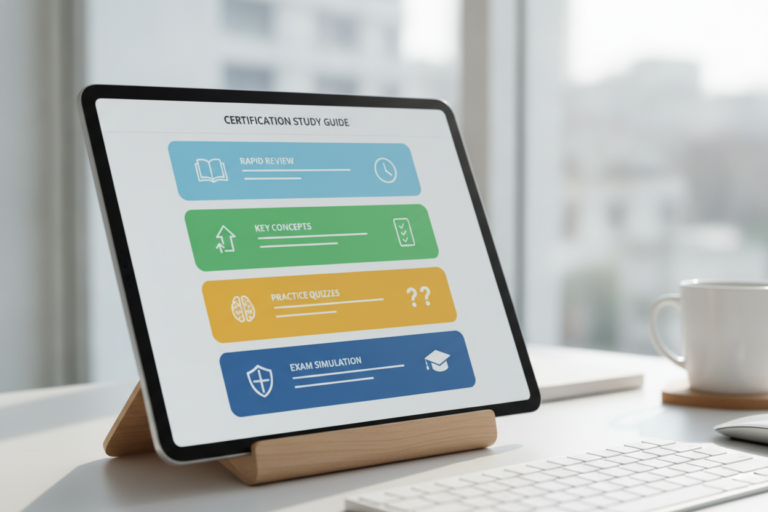
For a rapid review guide, the simulation should stay clean and easy to access. It should be clearly separated from the quiz and the One-Sheet so users know exactly which study mode they are entering. That clarity helps the page serve both quick review and deep practice. In the end, a realistic mock exam gives learners the best possible rehearsal before the real test.