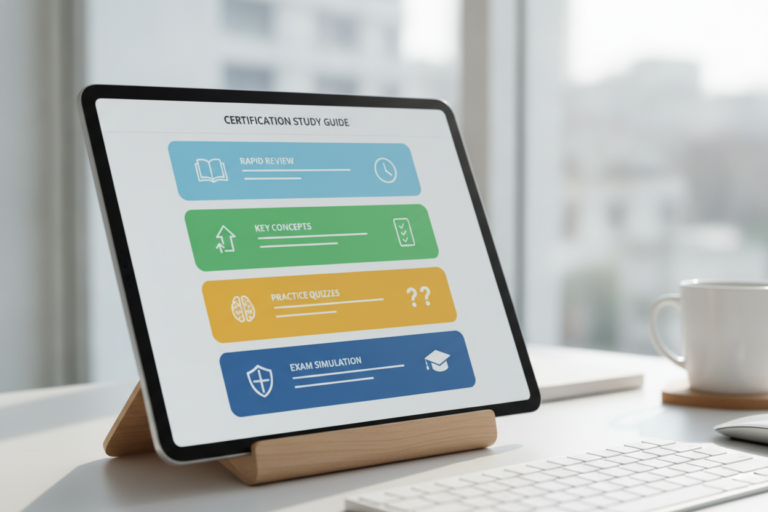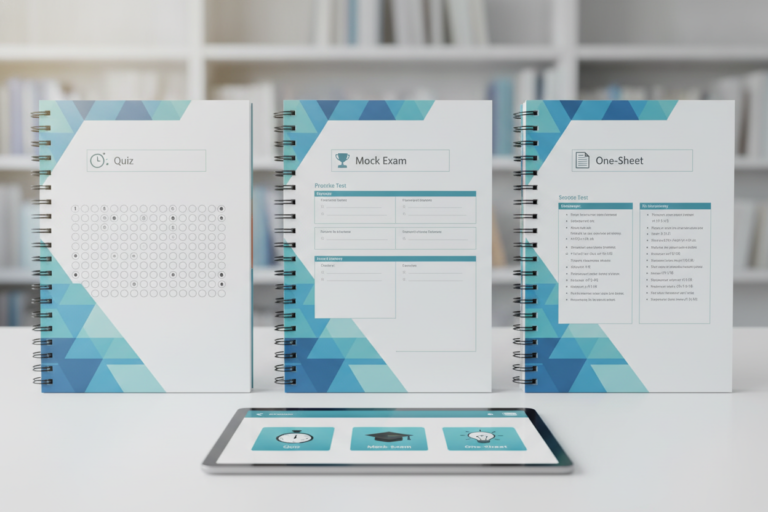
Score targets give mock exams a clear purpose. Instead of treating a practice test as a vague exercise, learners can use it as a measurable checkpoint on the way to certification. That makes study sessions more focused and helps them decide whether they are ready to test or need another round of review.
When setting score targets, it helps to mirror the real exam as closely as possible. If the official passing score is known, place that information near the mock exam so readers can compare their results honestly. If the test uses a scaled score or competency threshold, explain that in simple terms. The important thing is to make the benchmark easy to understand.
Score analysis should go beyond right and wrong answers. Readers should notice which topic areas they consistently miss and whether the misses come from knowledge gaps or time pressure. This is where the mock exam becomes valuable as a study tool rather than just a confidence check. It reveals patterns that a quick quiz might not show.
For a one-page certification guide, score targets should feel practical and motivating. They should help learners identify progress without making them obsess over perfection. A solid mock exam score, combined with a strong quiz performance and a thorough One-Sheet review, gives the user a clear picture of readiness. That combination is exactly what fast, streamlined test prep should deliver.